
15 Effective Tips to Prepare for NIOS Exams Successfully – Complete Student Guide
Introduction
The National Institute of Open Schooling (NIOS) is one of the largest open schooling boards in India. It provides flexible learning opportunities for students who cannot attend regular schools due to personal, financial, or health reasons. NIOS allows students to study at their own pace and complete their education while managing work, family responsibilities, or other commitments.
However, preparing for NIOS exams can be challenging because many students study independently with or without regular classroom support. Unlike regular school students, NIOS learners must plan their studies, revise topics, and practice exams on their own. Therefore, proper planning, discipline, and effective study techniques are essential to score good marks.
This blog provides a complete guide for NIOS students to prepare effectively for their exams. For additional subject-wise notes and guidance, students can visit https://srikrishnioschool.com/ for free learning resources and exam tips.
- Understand the NIOS Exam Pattern Clearly
Before starting preparation, it is important to understand how the NIOS examination system works. Many students start studying without knowing the question pattern, which leads to confusion and fear during exams.
NIOS question papers usually contain a mix of different types of questions to test both knowledge and understanding, such as:
- Objective questions (MCQs)
- Short answer questions
- Long answer questions
- Case-based or application-based questions, especially in subjects like Psychology and Science
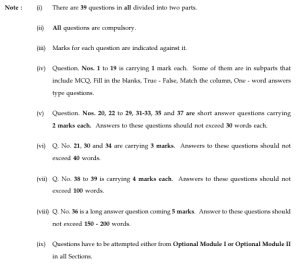
Each subject also has a specific marking scheme and chapter-wise weightage. Students should download the latest syllabus and sample question papers from the official NIOS website. Understanding the exam pattern helps students prepare in a focused manner and reduces exam anxiety.
- Create a Realistic and Practical Study Plan
A well-organized study plan is the foundation of successful exam preparation. Many NIOS students fail to score well because they study only a few days before the exam.
To create an effective study plan, students should:
- List all subjects and chapters
- Identify difficult and easy topics
- Allocate daily study time for each subject
- Keep separate time for revision and practice tests
Students should study difficult subjects like Mathematics or Science in the morning when the mind is fresh. Theory subjects such as Psychology, Social Science, or Business Studies can be studied in the afternoon. In the evening, students should revise what they studied and practice previous year question papers.

Consistency is more important than studying for many hours. Even 3 to 6 hours of focused study daily can produce excellent results.
- Use NIOS Self Learning Material (SLM) Effectively
NIOS provides Self Learning Material (SLM) for all subjects, which is the most important resource for students. Many exam questions are directly based on these books. Secondary – https://nios.ac.in/online-course-material/secondary-courses.aspx and Sr. Secondary – https://nios.ac.in/online-course-material/sr-secondary-courses.aspx
Students should read each chapter carefully and focus on understanding the concepts. Important points should be highlighted, and short notes should be prepared in their own words. Diagrams, tables, and examples should not be ignored because they are frequently asked in exams.
Tutor Marked Assignments (TMA) and Practical Manuals are also important because they carry internal assessment marks. Completing assignments on time can help students score additional marks. For simplified explanations and chapter-wise notes, students can refer to https://srikrishnioschool.com/.
- Focus on Understanding Concepts Instead of Memorizing
Many students believe memorization is the key to success, but NIOS exams focus more on understanding and application of knowledge.
Students should understand concepts using real-life examples. For example, in Psychology, topics like memory and learning can be understood through daily life experiences. In Science, students should understand experiments instead of memorizing definitions.
Teaching a topic to someone else is an effective learning technique. Mind maps, flowcharts, and diagrams can also help in remembering complex topics. Understanding concepts helps students write answers confidently in their own words.

- Practice Previous Year Question Papers Regularly
Practicing previous year question papers is one of the most effective preparation methods.
- Helps students understand the question pattern
- Identifies important topics frequently asked
- Improves writing speed
- Develops time management skills
Students should solve papers in exam-like conditions with a timer and analyze mistakes after solving. Regular practice builds confidence and reduces exam fear.
- Develop Good Answer Writing Skills
Knowing the answer is not enough; students must also know how to present their answers properly. NIOS examiners give higher marks for well-structured and neatly written answers.
Students should start long answers with a brief introduction or definition, explain the main points clearly, and conclude the answer properly. Diagrams and examples should be included wherever possible. Good handwriting and proper spacing can significantly increase marks.
- Make Personal Notes for Quick Revision
Making personal notes is very useful for quick revision before exams. When students write notes in their own words, they understand the topic better and remember it for a longer time.
Students should write key points, definitions, formulas, and important diagrams in their notebooks. Each subject should have a separate notebook for organized study. Before exams, students can revise these notes instead of reading the entire textbook again.
- Use Smart Revision Techniques
Revision is essential for learning. Without revision, students may forget what they studied earlier.
- Use flashcards for definitions and formulas
- Solve MCQs and short quizzes
- Teach topics to friends or family members
Regular revision improves confidence and reduces last-minute stress.
- Manage Time Effectively During Exams
Time management is crucial during exams. Many students know the answers but cannot finish the paper on time.
Students should read the entire question paper carefully, start with easy questions, and attempt difficult questions later. They should not spend too much time on one question and should leave some time for revision at the end. Practicing timed tests during preparation can improve speed and accuracy.
- Take Care of Physical and Mental Health
Good health is essential for good academic performance.
- Sleep at least 7–8 hours daily
- Eat healthy and balanced food
- Drink enough water
- Take short breaks during study
- Do light exercise or stretching
A healthy body and mind help students concentrate better and perform well in exams.
- Stay Motivated and Positive
Many NIOS students feel stressed or think they cannot succeed. It is important to remember that NIOS is not easy or difficult; it depends on how well students prepare.
Students should set small goals, reward themselves, and maintain a positive mindset. Consistency and hard work are the keys to success.
- Use Online Resources and Teacher Support
Today, many online resources are available for NIOS students.
- Educational YouTube channels
- Online mock tests and quizzes
- NIOS student forums and groups
- Teacher guidance and coaching centers
Websites like https://srikrishnioschool.com/ provide subject-wise notes, exam tips, and simplified explanations for NIOS students.
- Prepare Well for Practical Exams and Internal Assessments
NIOS includes practical exams and internal assessments in many subjects. These carry marks and can significantly improve overall scores.
Students should complete Tutor Marked Assignments on time, practice practical experiments, and prepare for viva questions. Project work should be neat and well-organized.
- Avoid Common Mistakes Made by NIOS Students
Many NIOS students make common mistakes such as studying only before exams, ignoring NIOS books, not practicing question papers, poor handwriting, and panic during exams. Avoiding these mistakes can improve performance and reduce stress.
- Important Exam Day Tips
Before the exam, students should revise important topics, sleep well, and keep their hall ticket and stationery ready. During the exam, they should stay calm, read questions carefully, and manage time properly. After the exam, they should not worry about mistakes and should focus on the next paper.
Conclusion
Preparing for NIOS exams requires proper planning, consistent effort, and a positive mindset. By understanding the exam pattern, using NIOS study material effectively, practicing question papers, and maintaining good health, students can achieve excellent results.
NIOS provides a flexible and valuable learning opportunity for students. With the right preparation strategies, every student can succeed in NIOS exams. Remember, success is not about how fast you learn, but how consistently you learn.
Start your preparation today, stay focused, and believe in yourself. For more study materials, notes, and guidance, visit https://srikrishnioschool.com/ and make your NIOS learning journey successful.
